
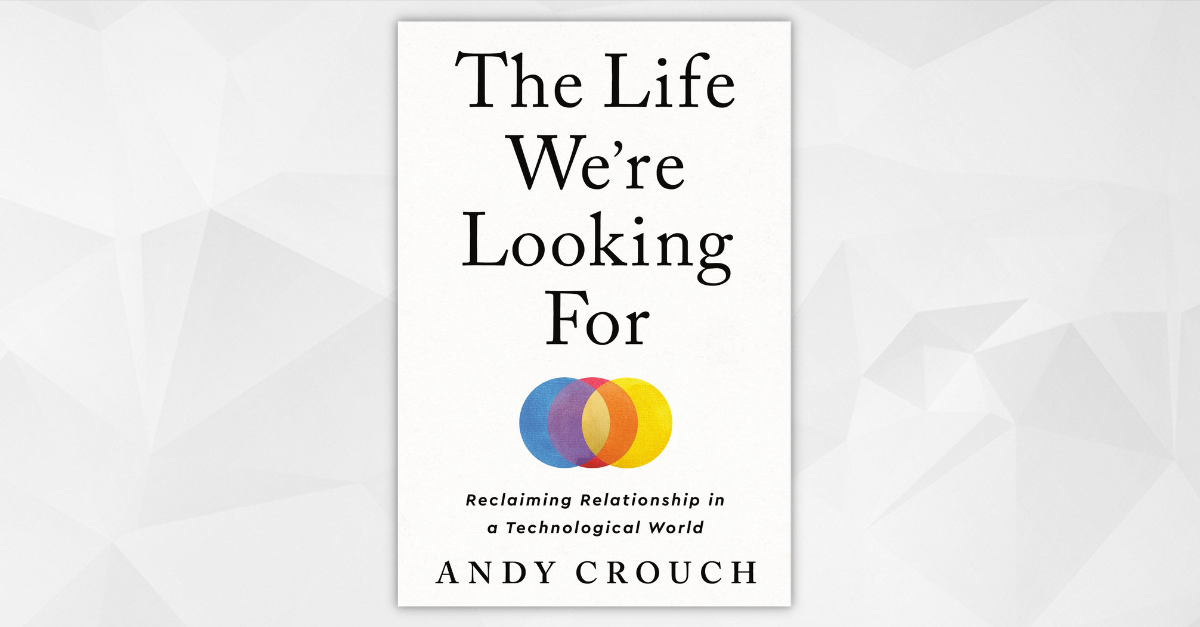
“Our greatest need is to be recognised – to be seen, loved, and embedded in rich relationships with the people around us. But for the last century, we’ve displaced that need with the ease of technology.”
Our first human quest, from within the first hours of being born, was to be recognised. To look for a face that looked back at us, a face that knew us and loved us. And we spend the rest of our lives in the pursuit of this, longing to be seen and loved.
In The Life We’re Looking For, author and cultural critic Andy Crouch explores how recognition is integral to being human and crucial to our flourishing as individuals. He presents the idea that at our core, we are heart-soul-mind-strength complexes, designed for love.
And yet, with our technological advances, we have designed a world that is more personalised, yet impersonal. And we have never felt more isolated, alone and unknown. Andy Crouch explains how we have been charmed by the false promises of technology and devices, offering a kind of “magic” that promises to expand our human capacities but ultimately fails to deliver and, more than that, actually inhibits us from becoming truly human.
Drawing on the example of Paul and the radical way of the early followers of Jesus, Crouch helps readers see a better way and offers hope for the future through the wisdom of the past.
Much like the Roman empire in the early church, we find ourselves today in the empire of Mammon – fuelled by money, control, and impersonal power - which draws us further from the loving relationships for which we were designed.
Yet, there is hope! The alternative Crouch paints in this book is that we indeed have the power to change our impersonal world, to escape magic and Mammon, and to design a world where technology serves us rather than masters us. A world in which households are places of deep recognition where we can be fully known and fully loved.
If you are looking for deeper insight into your God-given personhood, how to reclaim relationships in an impersonal world, and how technology, our society, and our economy might serve that end, then this book is well worth a read.
