
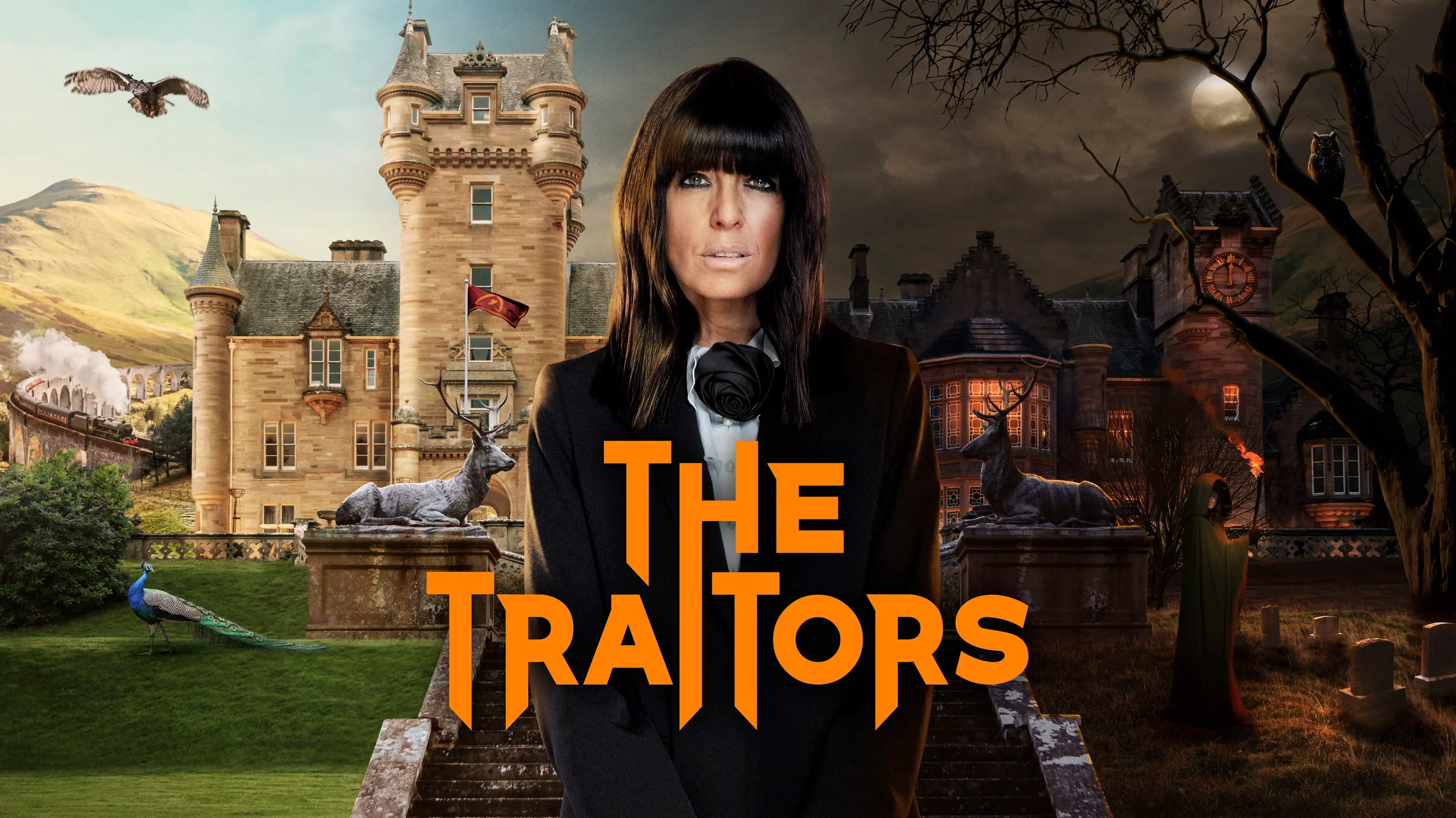
Last Friday saw not only a storm that caused a red weather warning across the whole country, but also another storm as many viewers tuned in to the final of The Traitors UK. This show has been entertaining us throughout January. The show’s ending has left a hole in many of our schedules, and we look forward to the release of the Irish version later this year, hosted by Siobhán Sweeney. But why does a show that is based on lying, deceit and betrayal grip our attention so much? What do we see in this game and in the contestants that tells us of our world today?
The premise of the show is that, at the beginning, there are 25 contestants who play the game for a chance to win up to £120,000. Among them, there are “Traitors” selected at the beginning (in this case, 3), while the rest are “Faithfuls” who work as a team to find and banish the Traitors each night at the round table when they vote someone out. The Traitors then get to “murder” someone at night, who then exits the show. In the final episode,, the remaining players can vote until they believe there are no more Traitors,, and then split the money. If a Traitor remains, however, they win the full sum of money.
Given the nature of the game, it is no surprise that there is a very much “every man for themselves” mentality among the players, which became increasingly evident as the game progressed, with Traitors voting out Traitors and Faithful voting out Faithful. With very little evidence to go on, one movement, action or sentence that seemed different from what the rest were doing led to banishment. Why did the Faithful struggle to trust each other and work as a team?
As the show progressed, as the viewers, we watched friendships and bonds form between the contestants with statements such as “I could never lie to you” and “you can trust me”, and we witnessed these statements knowing that many times they were outright lies. As viewers, we can revel in the drama while knowing the truth and watching it all unfold. Watching the show this year for the first time, it became apparent that people will do anything to win something for themselves, therefore ultimately preventing true connections and trust.
It is, by nature, a selfish game with each player trying to control everyone around them to prevent their banishment. A good example in this year’s series was Leanne, who we saw wanted to be close to people; she wanted to trust them and create genuine connections. However, in the end, what we really saw was that as soon as anyone thought differently from her or became suspicious of her, she turned on them to banish them. Her desire to reach that final and win the prize ultimately hindered her connections with other players. We see this right to the end, even as she banished Frankie, her fellow mother in the group and someone she had built trust with as Faithfuls, to ensure she would win the money.
I think the game shows a real insight into what we seek as humans. We seek deep connections with people; we desire friendships with people we can trust, but just like the contestants in The Traitors, we also want to control everything around us – to play God. This ultimately hinders how we care for and love people and how we view ourselves. We are often so focused on ourselves that we can end up seeking success and losing connection in the process.
The reality is that in our own lives as Christians, we know that this connection with others is what God intends for us. We are called to be people who are faithful to Him, people who seek to put others first and trust in the One who knows and sees all of how our lives play out. When our identity is safe and secure in Christ, we are truly free to seek these genuine connections with people from a firm foundation. We don’t need to control our lives and those around us, but we can be confident in who we are in Christ and know that He is the centre of our lives – not us.
So why are we so fascinated? Partly because we love the game and the escapism, but partly also because we see some of the reality of our world. What a great comfort to remember that our lives aren’t a game that we have to fight to win, but they have been won in Christ, and we know the outcome. We can enjoy this world and love the people in it through Christ!
